Your garage door is more than a daily entryway; it is a complex, heavy system that relies on cables, springs, and other components working together. Garage door cables, along with the springs, carry most of the door’s weight and control its tension, allowing it to open and close in a controlled, safe motion. When these cables wear, fray, or fail, the garage door system can become unstable and unsafe for nearby homeowners.
Recognizing early warning signs of garage door cable failure is essential for protecting your home, family, and property. Unusual noises, uneven movement, sagging sections, or a door that feels heavier than usual are signals that something is wrong. By acting quickly and scheduling a professional inspection at the first sign of trouble, you can prevent sudden breakdowns, avoid damage to parts, and maintain a safer, more reliable garage door.
Understanding Garage Door Cables and Their Role in Safe Operation
Garage door cables are high-strength steel wires that support the full weight of the door as it opens and closes. Working together with the springs, they control tension so the door moves smoothly and safely. When cables wear out or fail, the springs cannot lift the door correctly, and the entire system may stop operating as intended. Understanding how important these cables are helps you recognize that any signs of fraying, rust, or slack should never be ignored.
If you want a closer look at how balance problems show up while the door moves, make sure to read How to Recognize Garage Door Imbalance and Uneven Lifting.
Why Garage Door Cables Are Essential for Houston Homes
For many Houston homeowners, the garage door provides both security and everyday convenience. The garage door cable is one of the main parts that carries the weight of the door and keeps it aligned on the tracks. If it fails, the door may not open at all, and the area can quickly become unsafe. Old, damaged, or improperly sized cables increase the chance of the door dropping suddenly or going off track.
Cable size and rating must match the door’s weight and design. A universal cable is not suitable for every garage door. Using a cable that does not match the door can cause early failure and create safety risks. A reliable garage door technician can inspect the system, select the appropriate cable type, and perform the installation safely.
To better understand how strain and stress show up when cables are in trouble, you can also explore Signs of Mechanical Strain in Garage Door Operation.
How Cables Work with Springs and Drums
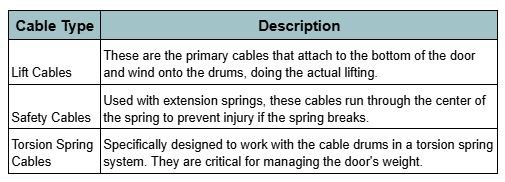
Garage door cables are central to the operation of the lifting system. In a torsion spring setup, each cable attaches to the bottom bracket and wraps around a drum on the torsion shaft; as the springs unwind, they turn the shaft and drums, pulling the cables to lift the door. With extension springs, the cable runs from the bottom of the door through pulleys to the springs, transferring the springs’ lifting force so the door’s weight is balanced and movement remains smooth. Because spring tension is extremely high, attempting cable repair without training and proper winding bars can leave a homeowner badly injured or cause severe damage to other parts, so professional service is the safest choice.
Learn how wear in these cables can suddenly stop this system from working, read How Cable Wear Puts Your Garage Door at Risk of Sudden Breakdown.
Common Materials and Types of Garage Door Cables Available
Most garage door cables are made from galvanized, aircraft-grade steel for durability and corrosion resistance, with common constructions like 7×7 or 7×19 strands that provide strength and flexibility as they wrap around the drum. When a spring cable fails, it should always be replaced with a cable that matches the door’s weight, hardware, and system type. Extension spring systems also rely on safety cables that run through the springs to contain them if they fail, reducing the risk of property damage or injury. Since each garage door system has specific requirements, the best option is to have a garage door professional inspect the setup and select the correct replacement cables and related parts for reliable, long-term performance.
DASMA’s official safety tips explain why lift cables and springs should be treated as high-tension safety hardware, not DIY components.
Main Warning Signs of Garage Door Cable Failure
Seeing early warning signs of garage door cable failure helps you stay safe and avoid costly damage. Most warning signs can be detected before the cable fails, so pay attention to how your door moves and sounds. Small changes often reveal bigger issues with the cables and other parts.
If something seems unusual, your garage door system may already be under tension and at risk. These warning signs often indicate that the cable is worn, loose, or near failure. When you notice any of the issues below, stop using the door and contact a garage door expert for a full inspection and safe repair.
Uneven or Imbalanced Garage Door Lifting
One of the most evident signs of cable trouble is an uneven or crooked garage door. If the door appears slanted while moving or does not sit flat on the floor when closed, one cable may be stretched, loose, or broken. This causes one side of the door to rise higher than the other.
An imbalanced door creates extra load on the remaining cable, tracks, rollers, and opener. Continued use can wear out these parts faster and increase the chance of severe damage. A door that is out of balance can come off the tracks or jam suddenly. If your door appears uneven, stop operating it and schedule a professional inspection right away.
Loose, Frayed, or Hanging Garage Door Cables
A quick visual inspection can reveal serious cable problems. With the door closed, check the cables on both sides. If you see slack cables hanging down, the cable may have come off the drum or may have snapped.
Frayed cables are another major warning sign. Over time, friction and moisture weaken the steel strands, leaving the cable thin and fragile. A frayed cable is much more likely to fail under the door’s weight. Never attempt to handle or adjust a damaged cable yourself, as the system is under high tension. Watch for:
- Broken strands or fraying along the cable
- A cable hanging loose instead of staying tight
- Rust or corrosion that weakens the steel
- A cable that has slipped completely off the drum
If you see any of these issues, contact a garage door professional as soon as possible.
Difficult Garage Door Operation and Sudden Stops
If your garage door sticks, makes grinding noises, or stops halfway, many homeowners assume the opener is failing. In reality, cable problems often cause this behavior. A damaged or misaligned cable throws off the balance of the door, forcing the opener to operate beyond its design limits.
This extra strain can cause the opener motor to fail and may damage tracks, rollers, and panels. When the door hesitates, stops, or moves roughly, a cable may already be close to breaking. Because the door uses significant force to move, any change in normal operation is serious. If your garage door no longer opens and closes smoothly, have the entire system inspected promptly before a minor cable issue becomes a complete failure.
Related Safety Issues: Imbalance and Uneven Lifting
A garage door that does not lift evenly is not a minor issue. It can be a big safety issue. This kind of uneven movement is often caused by trouble with the cables. It puts a lot of pressure on the garage door’s hardware. If you ignore this, your garage door could fail completely. This significantly increases the risk of injury and damage to your belongings.
How to Recognize Garage Door Imbalance
Checking for a garage door imbalance is simple and something every homeowner should know. Start with a manual balance test: pull the emergency release cord to disconnect the opener, then lift the door by hand to about waist height. Let go, and if it stays in place, spring tension is likely correct. If it rises or drops, the tension may be off, often due to cable or spring issues.
You can also spot problems by checking the bottom of the door when closed. A gap under one side, scraping on one track, or a door that appears crooked while moving all point to imbalance. Key signs include: an uneven door during operation, failing the balance test (rising quickly or slamming down), a visible gap on one side at the floor, and grinding or scraping noises on a single track. Catching these signs early helps keep the system operating properly.
Risks Associated with Uneven Garage Door Movement
Operating an unbalanced garage door creates serious safety risks. When a cable is loose or broken, most of the door’s weight shifts to the other side, placing heavy strain on the remaining cable, rollers, and track. That cable can then snap, causing the door to drop suddenly and without warning.
This added load can bend tracks, displace rollers, and damage door panels, turning a simple cable issue into costly repairs. There is also a real risk of injury or property damage if the door falls while anything is underneath. To protect your household and belongings, uneven movement sshould be addressed immediately by a trained garage door professional who can rebalance the door and replace any worn or damaged parts.
Mechanical Strain as an Indicator of Cable Problems
Mechanical strain is a strong warning that something is wrong with your garage door cables. When cables start to fail, the system becomes unbalanced, and other components must work harder. You may hear unusual sound or notice that the door is harder to move. These changes often indicate that a cable could fail soon. By watching how the door moves and sounds, a homeowner can catch cable wear early and avoid larger damage to the garage door system.
Identifying Unusual Sounds and Mechanical Resistance
A healthy garage door should move smoothly and stay fairly quiet. Grinding, scraping, or loud popping often point to cable or spring trouble. A popping sound can indicate that a high-tension cable is slipping or a spring may soon fail, while grinding often occurs when a cable comes off the drum and rubs against other parts.
If the door suddenly feels heavier, is difficult to lift by hand, or gets stuck, the springs and cables may not be supporting the door correctly. These are signs that the system is under heavy strain and that cables, springs, or set screws may be failing. Handling these problems early through professional inspection and repair helps you avoid more serious damage.
Emergency Garage Door Situations Due to Cable Wear
When a garage door cable snaps, the door can become stuck, hang at an angle, or trap your vehicle. Pulling the emergency release cord in this situation is very risky because the door can drop suddenly, causing serious injury or damage. Forcing the door to move can also bend tracks and break panels, turning a cable issue into a major repair.
After a cable failure, the safest choice is to leave the door as it is and contact emergency garage door services. A trained expert will arrive with the correct tools, secure the door, replace damaged parts, and restore safe operation so you can use your garage again with confidence.
Safety references explain that containment cables help control spring energy and prevent hardware from becoming dangerous projectiles during failures.
How Cable Wear Puts Your Garage Door at Risk of Sudden Breakdown
Every time you use your garage door, the cables bend, rub against hardware, and face moisture or dirt. Over time, this wears thin the metal strands and weakens the cable, even if damage is hard to see. A worn cable greatly increases the chance of sudden garage door failure, especially when the door is moving and under heavy load. Replacing cables at the first sign of wear is one of the most effective preventive steps a homeowner can take.
The Connection Between Worn Cables and Unexpected Garage Door Failure
Garage door cables stay under tension and support the full weight of the door on every cycle. As the steel strands age, they lose strength and become more likely to snap when extra pressure is applied. When a damaged cable fails, the door may tilt sharply, jam in the tracks, or, if both cables fail, drop suddenly. Even one frayed area is enough to weaken the entire cable and should be treated as a serious safety warning that calls for prompt replacement by a professional.
Average Cost Factors for Garage Door Cable Repair in Texas
Garage door cable replacement cost in Texas depends on several details, not a single flat price. Key factors include:
- Door type: Heavy wood, insulated, or custom doors often require stronger cables and longer service time.
- Spring system: Torsion systems are usually more complex to repair than extension systems.
- Extent of damage: If a failed cable has bent tracks, damaged rollers, or strained the opener, those repairs add to the total.
- Labor and urgency: Rates vary by area and whether standard or emergency service is needed.
A garage door technician can inspect your system, confirm the exact cause of failure, and provide a clear, accurate estimate for safe, code-compliant cable repair or replacement.
Garage Door Cable Repair Versus Professional Service
When a garage door cable breaks, many homeowners wonder if they should handle the repair themselves. While DIY might seem cheaper, garage door cables and springs are under extremely high tension, and incorrect handling can leave you seriously injured or cause major damage to other parts.
Professional garage door technicians have the right tools, training, and safety procedures. They can replace worn cables, check spring tension, inspect drums and brackets, and identify any hidden issues that may have caused the failure. This helps restore safe operation and reduces the chance of another sudden breakdown.
When Garage Door Installation Might Be Needed After Cable Failure
In some cases, cable replacement is only part of the problem. If a cable fails while the door is moving, the door can drop, twist, or jam, which may bend tracks, damage panels, and strain or break the opener. When several parts are damaged at once, repair costs can approach the price of a new door.
If that happens, a complete garage door installation may be the smarter long-term choice. A qualified expert can evaluate the full system, compare repair versus replacement costs, and recommend the safest, most cost-effective option so you can decide whether to restore the existing door or upgrade to a new, reliable system.
Importance of Prompt Action and Preventive Maintenance
Ignoring early warning signs from your garage door almost always leads to higher repair costs and more downtime later. When you act as soon as you notice unusual noise, movement, or cable wear, you reduce the risk of accidents and minimize damage to other components. Regular maintenance supports long-term safety and dependable performance.
Caring for the system early and often gives you a better chance to catch frayed cables, imbalance, or rust before a sudden failure. Simple visual checks and scheduled service help you stay ahead of problems instead of reacting to emergencies.
Benefits of Early Garage Door Cable Inspection
Quick cable inspections from time to time can reveal issues before they escalate. When you notice snapped strands, rust, or slack early, you can plan a controlled repair instead of facing a door that will not open or close. You mainly want to watch for fraying, corrosion, and loose cables along each side.
Early action lets you schedule service on your terms, rather than dealing with an urgent breakdown. A reliable technician can perform a detailed inspection, confirm cable condition, and recommend the right repair or replacement. Key benefits include:
- Enhanced safety: Lowers the chance of a door dropping suddenly or a cable snapping under load.
- Cost savings: Reduces damage to tracks, rollers, springs, and opener parts.
- Longer lifespan: Helps the entire garage door system operate smoothly for more years.
- Peace of mind: Reassures you that your garage door is safe and ready for daily use.
Choosing the Right Time for Emergency Garage Door Cable Repair
If you notice serious cable problems, do not delay. A broken or nearly broken cable carries a high risk of injury and damage. Call for emergency repair when the cable is snapped, the door appears crooked, or the door will not open or close reliably.
Avoid attempting repairs on your own. Without the right tools and training, you can worsen the damage or end up injured because of high spring tension. The best time to contact a repair technician is the moment you notice a critical issue. An expert can secure the area, restore safe operation, and return access to your garage as quickly as possible.
Recognizing the warning signs of garage door cable failure is essential for keeping your garage safe, secure, and reliable. If you notice uneven or imbalanced lifting, difficult operation, or signs of mechanical strain, acting quickly helps prevent sudden breakdowns and protects your home, vehicle, and family from avoidable risks. Preventive inspections and timely repairs also support a longer lifespan for your entire garage door system.
At Premium Garage Door Repair, our trained technicians can inspect your system, identify cable and hardware issues, and complete precise repairs so your door operates smoothly again. If you suspect a cable problem or your garage door is no longer working the way it should, contact us today or give us a call to schedule service. Taking action now is a simple step that can restore your peace of mind.
Frequently Asked Questions
How do I safely repair a snapped garage door cable?
You should not repair a snapped cable yourself. Garage door springs hold heavy tension, and handling them without training can leave you seriously injured. Only a trained technician with proper tools, including winding bars, should replace a broken cable to restore safe operation.
What are common garage door repair problems?
Frequent issues include damaged cables, worn springs, doors that go off track, imbalance, and opener malfunctions. Many problems occur because cables and springs operate under constant tension and wear. Early inspection by a technician helps prevent larger failures.
What are the signs of faulty or broken garage door springs?
Clear gaps in the spring, sudden loud noises, a door that feels heavy, or a door that will not open often signal spring failure. Because spring tension affects cables, a broken cable may also indicate spring trouble.
Is it safe to operate a garage door with a broken cable?
No. A broken cable removes the tension needed for safe operation, which can cause the door to fall and damage tracks or the opener. Stop using the door immediately and schedule professional repair.
What is the life expectancy of a garage door cable?
Most cables last 7–10 years, depending on weather, door weight, and maintenance. Rust, fraying, or slack during inspection means the cable is wearing out and should be replaced before failure.
What tools are needed for garage door cable replacement?
Proper tools include winding bars, locking pliers or C-clamps, a socket wrench for set screws, and safety glasses. A cable matched to your door’s size and rating is required. Because of high tension, professional service is strongly recommended.
Is it better to hire a professional for garage door cable repair?
Yes. Garage door systems operate under heavy tension, and incorrect handling can cause injury and further damage. A professional can safely complete the repair and ensure the system is properly balanced.
How do you replace a garage door cable?
A technician releases spring tension with winding bars, secures the door, removes the damaged cable, installs a matching replacement, and restores proper tension. Because this process is hazardous, it should not be done without training.
What happens when a garage door cable breaks?
The door may tilt, jam, or drop suddenly, creating safety risks and damaging rollers, tracks, or panels. The system is unsafe to operate until a qualified technician replaces the cable.
How does a garage door cable work?
Cables attach at the bottom of the door and wrap around drums. As springs release stored energy, the drums turn, pulling the cables and lifting the door evenly through controlled tension.