Your garage door cable quietly handles heavy work every day, lifting and lowering the door while keeping everything balanced and controlled. Over time, constant use, tension, and exposure to moisture can cause this cable to wear, fray, or weaken. When that happens, the entire garage door system becomes less stable and more likely to fail without warning. For any homeowner, understanding how cable wear develops is essential for keeping your door operating safely and reliably.
Cable wear rarely shows up all at once. You may notice subtle signs first—uneven lifting, strange noises, or cables that appear worn or out of place. These are early warnings that the system is under tension it should not have. By recognizing and responding to these signs quickly, you reduce the risk of sudden breakdowns, protect your garage door hardware from further damage, and help maintain a safer entry point for your home.
Understanding the Importance of Garage Door Cables
Garage door cables are essential parts of the entire lifting system. Working alongside torsion or extension springs, they manage the heavy tension required to raise and lower the door safely. Without these cables, the springs cannot transfer the lifting force, and the door would not move. Keeping the cables in good condition is key to maintaining smooth, controlled operation and preventing unsafe door movement.
When cables weaken, fray, or slip out of alignment, the system’s balance is lost. This forces other parts to work harder and increases the risk of sudden system failure. Understanding what the cables do and how they support the overall mechanism helps homeowners recognize why cable condition matters and why early attention to wear is so important.
For a homeowner-focused checklist of early warning indicators to watch for, you can also read What Are the Warning Signs of Garage Door Cable Failure?”
The Role of Garage Door Cables in Safe Operation
Garage door cables serve as the lifting link between the spring system and the door. As the springs unwind, the cables wrap around the drum and help lift the door’s full weight. When the door closes, the cables unwind under control while the springs support the load. This balanced movement prevents the door from slamming or dropping suddenly.
Because the cables support hundreds of pounds during each cycle, they must remain strong, aligned, and properly tensioned. A worn or broken cable immediately disrupts this balance, causing the system to strain and placing additional load on the remaining cable, springs, and opener. Keeping the cables in reliable condition is essential for a safe, stable garage door system.
To understand how improper lifting behavior reveals cable trouble, read How to Recognize Garage Door Imbalance and Uneven Lifting.
How Cable Wear Develops Over Time
Every time the door moves, the cables wind and unwind along the drums and pulleys. This repeated motion slowly wears down the thin steel strands. Over several years of daily use, the metal can weaken, stretch, or begin to fray. Environmental conditions, especially humidity and moisture exposure, accelerate corrosion and further reduce cable strength.
Without regular inspections, early signs of wear can go unnoticed. As the cable weakens, more strain is placed on the garage door opener, springs, and bottom bracket. When cable wear progresses far enough, failure often happens suddenly and without warning. Staying aware of how cable wear develops helps prevent unexpected breakdowns and protects the entire garage door system.
For more insight on how these subtle issues appear through sound and movement, read Signs of Mechanical Strain in Garage Door Operation.
Common Causes of Cable Wear and Tear
Garage door cables face wear every time the door moves. Daily use, harsh weather, and skipped maintenance all speed up damage. Without regular checks, minor issues can quietly escalate into serious problems that affect the entire system and increase the risk of sudden failures.
Making routine inspections part of your home care helps you catch cable wear early. Most cable damage comes from frequent operation and lack of preventive maintenance, so staying aware of these factors is essential for long-term performance.
Everyday Usage and Environmental Factors
Each open-and-close cycle places load and tension on the cable. Over the years, this repeated movement creates friction and metal fatigue, gradually weakening the strands. Heavy, frequent use shortens cable life even more.
Environmental conditions also play a big role. High humidity, coastal salt in the air, and dust or debris inside the garage all accelerate wear and corrosion. Key factors that cause faster cable wear include:
- High humidity that encourages rust and corrosion
- Large temperature swings that make metal expand and contract
- Salt in coastal air that speeds up corrosion
- Dirt and debris that increase the friction on moving parts
Understanding how your local climate and usage patterns affect the system helps you plan more effective maintenance.
Rust, Corrosion, and Poor Maintenance
Rust and corrosion are among the most damaging forces to garage door cables. As rust forms, it weakens the steel wires, making them brittle and more likely to snap under tension. Often, severe internal weakening happens before a homeowner notices visible damage.
Consistent maintenance is the best defense. Allowing water, dirt, and debris to stay on the cables invites corrosion. Keeping hardware clean, applying recommended lubricant, and scheduling professional check-ups help cables remain stronger for longer.
When maintenance is neglected, minor rust can escalate into severe wear, leading to cable damage and unsafe operation. Addressing these issues early through regular inspection and service reduces the risk of sudden failure and helps keep your garage door system reliable.
Warning Signs Your Garage Door Cable Is Failing
Knowing the warning signs of garage door cable failure helps you act before the system becomes unsafe. These signs often start small but grow more evident as the cable weakens. Watch and listen for changes in how the door looks, sounds, and moves during everyday use.
Ignoring fraying, rust, or unusual noises increases the chance of a sudden cable snap. If you see a damaged or broken cable or notice multiple warning signs, contact a professional for a full inspection and safe repair.
Recognizing Fraying, Rust, and Visual Damage
A quick visual check is one of the easiest ways to tell if a cable needs attention. With the door closed, inspect the cables on both sides. Fraying appears as short, broken wire strands sticking out from the cable and is a clear sign of wear.
Rust is another major warning. Discoloration, rust spots, or pitting all mean the steel is weaker than it should be and more likely to fail under tension. Bends or kinks that change the cable’s normal shape are also severe.
Watch for:
- Frayed or broken wire strands
- Rust or discolored patches on the cable
- Kinks, sharp bends, or flattened areas
- A loose or hanging cable on one side of the door
Any of these signs means the cable may be close to failing and should be checked by a technician.
Unusual Noises and Movement During Garage Door Operation
Your ears can reveal cable problems just as well as your eyes. Loud pops, bangs, or grinding sounds during operation often indicate a failing or snapped cable or spring. These noises mean the system is under heavy tension and not working the way it should.
Movement changes are just as important. A crooked door, one that gets stuck, or one that struggles to open or close smoothly, often indicates cable trouble, even if it seems like an opener problem at first.
An overhead door that lifts unevenly or sags to one side usually has a stretched, damaged, or broken spring. When you notice these warning signs, stop using the door immediately and call a garage door professional for help.
The Dangers of Sudden Garage Door Cable Breakdown
A sudden garage door cable failure is a serious safety issue, not a minor inconvenience. When a cable snaps, the heavy door can drop without warning, creating a real risk of injury and damage to anything in its path. At the same time, other parts of the system can be damaged, including tracks, springs, and the opener.
Risks to Safety and Property
The most immediate danger from a broken cable is the possibility of the door slamming down quickly. Garage doors are extremely heavy, and a falling door can seriously injure anyone nearby and endanger pets.
A sudden drop can also crush a vehicle or damage items stored in the garage. The impact may bend tracks, crack door panels, and place a heavy load on the rollers and the opener. Because the entire system operates under high tension, a snapped cable is always a serious safety concern. DIY repair in this situation is not recommended.
Because the garage is already a higher-risk area for fires and stored hazards, First Alert’s garage fire-safety tips emphasize that a malfunctioning or falling door can increase the risk when vehicles, tools, or fuel containers are nearby.
Impact on Overall Garage Door Installation Performance
Once a cable fails, the door can no longer operate as designed. Springs and remaining cables are forced to carry more load than intended, which can quickly lead to spring failure and additional damage to the hardware.
Continuing to use the door with a broken cable can cause it to jump off the tracks, damage rollers and panels, and strain the opener motor. This chain reaction can turn a single cable issue into a complete system breakdown.
For these reasons, professional garage door repair is essential after any cable failure. A trained expert can replace the damaged cable, inspect the entire door installation for hidden issues, and restore safe, reliable operation—often on an urgent basis when safety is at stake.
Professional Garage Door Cable Repair in Houston, TX
When a garage door cable breaks, homeowners in Houston, TX need fast, reliable repair from a trained expert. Garage door springs and cables operate under very high tension, and working on them without proper tools and training can leave a homeowner seriously injured or cause further damage to the system.
Choosing a professional means your door receives high-quality replacement cables matched to your door’s weight and spring system. A technician will also inspect the entire setup, including springs, drums, brackets, and tracks, to confirm everything works safely and smoothly after the repair. This helps your garage door operate more reliably for the long term.
What to Expect During Expert Cable Replacement
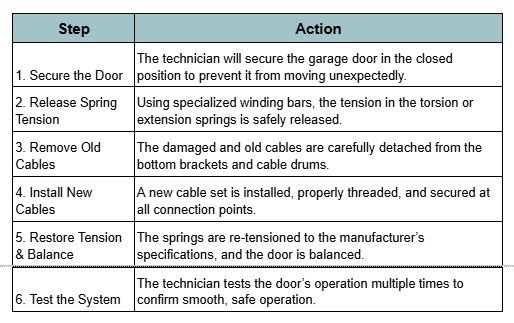
During professional cable replacement, the technician follows a careful, step-by-step process designed for safety and balanced operation. They safely release spring tension, remove the damaged cables, install new ones, and then restore the correct tension before testing the door several times.
Both cables are typically replaced together so they wear evenly and keep the door lifting straight. The expert will also check for hidden issues, such as worn springs or misaligned tracks, and address them as needed. By the time the job is complete, your garage door should open and close smoothly, with cables and springs working together under proper tension.
Here is a general overview of the steps a professional will take:
Understanding how garage door cable wear affects your system is essential for safety and reliability. Worn or damaged cables can cause sudden failures, putting your family, vehicle, and property at risk. Regular inspections, preventive maintenance, and quick action when you notice fraying, uneven lifting, or unusual noises help keep your door operating smoothly.
Premium Garage Door Repair can inspect your cables, identify early signs of strain, and provide professional repair so your garage door stays safe and dependable. If you notice anything unusual with your garage door cables or overall operation, contact us or give us a call to schedule a visit and restore your peace of mind.
Frequently Asked Questions
How do you choose the right size and type of garage door cable?
Choosing the right lift cables depends on your door’s weight, height, and spring system. A technician will inspect your door and select cables matched to its specifications. Properly selected and installed cables can safely support the load and help your door operate smoothly and reliably.
What safety precautions should I take when handling garage door cables?
The safest approach is to avoid working on springs and cables yourself. Garage door spring systems stay under high tension, and working on them without training can leave a homeowner seriously injured. Always contact a professional for cable or spring service so the work is handled with proper tools and extreme caution.
How much does garage door cable repair usually cost in Houston?
Garage door cable repair costs may vary depending on your door type, the condition of related parts, and the service required. A qualified technician can inspect the system, explain the required work, and provide a clear estimate before starting any repair work.
Why did my garage door cable snap, and how can I safely repair it?
Cables often snap due to age, corrosion, or incorrect spring tension. Once a cable breaks, the only safe option is professional repair. Trying to handle a broken cable on your own can damage other parts of the system and put your safety at risk, so always call a garage door expert.
How do I choose the right size and strength garage door cable for my door?
Garage door cables must match the door’s weight and the spring style, whether torsion or extension. A professional will measure the door, verify the spring setup, and select cables with the correct diameter, strength rating, and length to keep your system balanced and safe over time.
What are the signs that my garage door cable needs to be replaced?
Common warning signs include fraying strands, rust, kinks, or a cable that appears loose or hanging. If a cable breaks, it must be replaced immediately. Whenever you notice these issues during regular inspection, contact a professional before the problem spreads to other parts.
What is the lifespan of a garage door cable?
Many garage door cables operate reliably for about 7 to 10 years, depending on usage and climate. Frequent cycles, moisture, and lack of maintenance can shorten that timeline. Regular inspection helps you spot wear early, and replacing aging cables before failure can prevent major system damage.
Can I prevent my garage door cables from breaking?
You can lower the risk by scheduling regular professional maintenance. During yearly service, a technician can inspect cables for wear, check tension, apply proper lubrication to moving parts, and make adjustments as needed. These preventive steps help reduce sudden failures and keep your door system ready for daily use. For more general garage door upkeep ideas that support cable life and overall performance, check out Journeyman HQ’s garage door maintenance tips for longevity.
What do garage door cables actually do?
Garage door lift cables work with the springs to move the door. They transfer spring tension to the door, allowing the system to raise and lower the full weight in a controlled way. If the cables fail or fall out of position, the door may not operate correctly and can become unsafe.
Do you need professional garage door repair?
Yes. Having a professional repair a damaged or broken cable is important for safety. Garage door maintenance involving high-tension parts can lead to injury or property damage if performed incorrectly. When an expert handles the work, you can be confident the repair is completed safely and correctly.