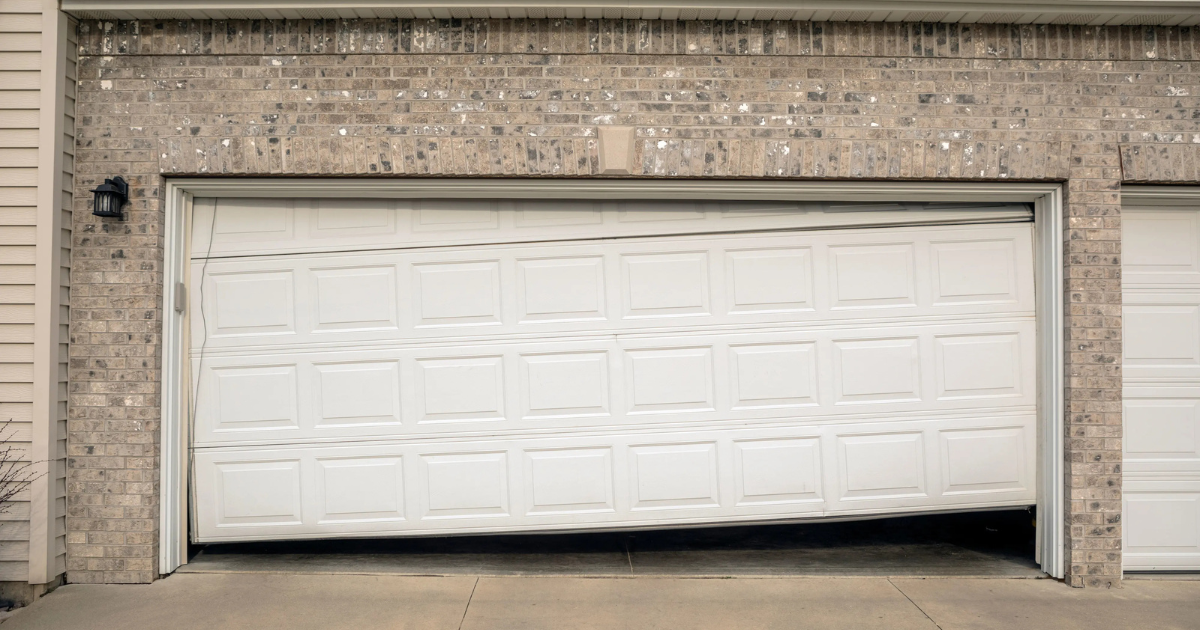
A garage door off-track problem usually starts small, then gets worse fast. One day, the door may shake a little, rub the frame, or sound louder than usual. Then suddenly it looks crooked, one side drops lower, or the rollers pop out of the metal track. When that happens, the door can become unsafe to use, and your garage can be left partially open.
In Houston, TX, daily heat, humidity, and frequent use can speed up wear on rollers, hinges, and track hardware. When those parts wear down or loosen, the door can start traveling unevenly. That uneven travel is one of the biggest reasons a door jumps the track.
How A Garage Door Ends Up Off Track
Your garage door rides on small wheels called rollers. Those rollers sit inside metal tracks on both sides of the door. When everything is aligned, the rollers stay centered in the track and the door moves up and down smoothly.
A door goes off track when one of these things happens:
- A roller climbs out of the track opening
- The track bends or shifts so the roller can’t stay inside it
- The door lifts unevenly, so one side pulls away from the track
- A worn or damaged part makes the door bind, twist, or jerk
Most off-track problems are not random. They’re usually caused by wear, loose hardware, impact, or an imbalance that has been building for a while.
If your door is already crooked or stuck, read What Should You Do When Your Garage Door Is Off Track.
Track Impact Or Bent Track Sections
One of the most common causes is simple impact. The vertical tracks run near where people store bikes, trash cans, ladders, tools, and yard items. Even a small bump can shift the track enough to cause trouble.
Common ways track impact happens
- A car bumper taps the track while parking
- A trash bin or lawn tool hits the track
- A bike handlebar catches the track
- A heavy item falls against the track
- A ladder slides into the track
When the track bends inward or outward, the rollers may rub, bind, or climb the track edge. Once a roller starts riding the edge, it can pop out, especially if the door keeps moving.
Warning signs of track impact
- A new scraping or grinding sound in one spot
- The door slows down or hesitates in the same place
- The door looks like it “wiggles” side to side
- You see a dent, kink, or shiny rub marks on the track
A bent track is more than a noise issue. It changes the path of travel. If your door is already off track, avoid running it again, because that extra motion can make the bend worse.
Loose Track Brackets And Mounting Hardware
Tracks are held in place by brackets and bolts. Over time, those bolts can loosen from vibration and repeated door cycles. In some cases, wall anchors can loosen too, especially if the mounting surface shifts.
When a bracket loosens, the track may move slightly from its intended position. That tiny shift is enough to change how rollers sit in the track. Once rollers are no longer centered, they can wobble, rub, and climb.
What loose track hardware can cause
- Track spreading wider at the top or bottom
- Track leaning inward toward the door
- The track is pulling away from the wall
- Rollers riding too close to the edge
Signs this might be the issue
- You can see gaps behind the bracket
- The track looks slightly crooked compared to the door
- You hear rattling during door movement
- The door shakes more than it used to
Loose hardware can lead to repeated derailment if it is not corrected properly. A real garage door off-track repair includes tightening and alignment checks, not only “putting the roller back.”
Worn Rollers That Wobble Or Bind
Rollers do a lot of work. They carry the weight of the door as it moves, and they deal with friction at every cycle. Over time, rollers wear down, especially if the door is used often.
When rollers wear, they may:
- Get flat spots
- Crack
- Develop wobble
- Lose smooth rotation
- Tilt inside the track
A roller that wobbles can drift toward the track edge. A roller that binds can cause the door to jerk. That jerk can push another roller out of place.
Signs your rollers may be worn
- Squealing or grinding sounds
- Visible cracks or chips on the wheel
- Rollers that look tilted instead of straight
- Jerky door movement
- The door shakes even when the opener is running normally
In Houston’s heat and humidity, roller wear can show up sooner when the door is used multiple times daily, and hardware expands and contracts with temperature swings.
Cables Slipping, Fraying, Or Lifting Unevenly
Garage doors use lift cables on both sides. These cables help lift the door evenly. If one cable slips off the drum, loosens, or frays, one side can lift higher than the other. That creates a twist.
When the door twists, rollers on one side may press harder into the track while the other side may pull away. That uneven pressure is a major off-track trigger.
What can cause cable issues
- Fraying from age or rust
- A cable slipping due to a drum problem
- A door that is out of balance
- Loose hardware around the bottom bracket area
- A previous repair that did not correct the alignment
Warning signs
- The door looks crooked while moving
- You see a slack cable on one side
- The door bangs or jerks as it starts
- The door seems to “lean” at the bottom
Cable issues are one of the reasons off-track doors can be dangerous. If a cable is compromised, the door can shift suddenly. If you suspect cable trouble, do not try to force the door closed.
For inspection-focused context on cable, spring, and hardware risks, reference this InterNACHI garage door safety overview.
If you’re unsure whether it is safe to close the door when cables might be involved, read Can You Close A Garage Door That Is Off Track Safely.
Door Sections Or Hinges That Are Damaged Or Loose
Your garage door is made of sections connected by hinges. If a hinge loosens or cracks, the door sections can separate slightly and change the door’s shape as it travels. Even a small shape change can affect how rollers sit inside the tracks.
Common hinge and section issues
- Loose hinge screws
- Cracked hinge plates
- Bent door sections from impact
- Door sections that sag or flex more than normal
When sections flex, rollers may angle inward or outward. That angle increases the chance of a roller climbing the track edge.
Signs to watch
- A visible gap between sections
- The door looks like it “bows” while moving
- The door makes popping noises at the hinges
- Rollers appear tilted near a specific hinge
This is another reason why quick DIY pushing can backfire. If the door is already twisting due to hinge or section problems, forcing movement can bend the hardware further.
Track Misalignment From Settling Or Prior Work
Sometimes a door goes off track because the track was not aligned correctly in the first place, or because the garage structure shifts slightly over time.
Track alignment issues can come from:
- Home settling
- Wall framing movement
- A previous repair that did not square the tracks
- Replacing parts without resetting alignment
When tracks are misaligned, the door may still operate for a while, but the rollers wear faster, and the door binds more often. Eventually, one roller may climb out.
Signs of track misalignment
- The door rubs the frame on one side
- The door “sticks” near the top or bottom
- The door sounds rough even after basic maintenance
- The gap between the door and frame is uneven
A technician usually checks spacing, level, plumb, and bracket stability to keep rollers tracking correctly through the full travel path.
Obstructions In The Track Path
Small debris can create big issues. If something blocks the roller path, the roller can climb, bind, or jump.
Common obstructions
- Pebbles or hardened dirt
- Small screws or bits of hardware
- Thick buildup of grime
- Objects leaning into the track area
What it looks like
- The door stops suddenly
- You hear a sharp metal-on-metal scrape
- The door reverses unexpectedly
- Movement becomes jerky in one section of travel
The Door Is Out Of Balance And Pulling Itself Off Track
Garage doors rely on springs to balance the weight. When the door is balanced, it should not feel extremely heavy, and it should not slam shut. If the balance is off, the opener works harder, and the door can lift unevenly.
An unbalanced door can:
- Pull harder on one side
- Increase cable strain
- Cause rollers to press unevenly into the track
- Create shaking and vibration that loosens brackets
Signs the door may be out of balance
- The door feels heavier than normal
- The door drops quickly when lowering
- The opener strains or sounds louder
- The door does not stay near mid-height when disconnected
If you want a step-by-step balance check from a major opener manufacturer, follow how to test garage door balance.
Opener Force Settings Or Travel Limits (Less Common, But Real)
Most off-track issues are mechanical, but opener settings can contribute. If the opener force is set too high, it may keep pushing even when the door is binding. That can twist the door and pop the rollers out.
If travel limits are off, the opener might push the door too far open or too far closed, increasing strain at the ends of travel. Over time, that strain can loosen hardware and speed up wear.
Clues opener settings might be involved
- The opener keeps pushing after the door hits resistance
- The door slams into the floor or stops hard at the top
- The opener sounds like it is forcing movement
What To Do If You Notice Early Warning Signs
Off-track events often give warnings. If you catch them early, you can avoid bigger damage.
Take action if you notice
- New scraping sounds
- Shaking that wasn’t there before
- A door that looks slightly uneven
- A door that pauses or jerks at one spot
- Rollers that look tilted
Smart first steps
- Stop running into the door repeatedly
- Inspect the tracks visually from a safe position
- Check the track area for obstructions
- If the door looks crooked, treat it as unsafe and call for service
Why DIY Repairs Often Fail For Off-Track Problems
A lot of homeowners try one of these moves:
- Forcing the door down
- Kicking a roller into the track
- Loosening track bolts and “eyeballing” alignment
- Pulling the emergency release and lifting fast
The problem is that off-track issues usually have a cause behind them. If the cause is worn rollers, loose brackets, cable imbalance, or track damage, the door may derail again soon, sometimes worse than before.
A correct repair usually includes:
- Finding the cause
- Resetting alignment properly
- Replacing worn parts when needed
- Testing smooth travel
- Confirming the door is stable through full movement
If you are trying to decide whether it’s time to call for professional garage door off-track repair, read When To Call For Garage Door Off Track Repair.
How A Technician Diagnoses The Real Cause
A technician usually starts with inspection and simple tests that show what is happening:
Common inspection points
- Are both tracks solid and aligned?
- Do rollers roll smoothly and sit centered?
- Do cables have even tension on both sides?
- Are hinges and brackets secure?
- Does the door move smoothly by hand?
- Are there visible bends, cracks, or worn contact points?
A good diagnosis focuses on why the door left the track, not only where it left the track. That is what prevents repeat issues.
What Houston Homeowners Can Do Next
If your door is starting to shake, scrape, or travel unevenly, treat it as an early warning. Off-track issues usually come from track movement, roller wear, cable imbalance, or hardware that has loosened over time. Catching the cause early can help prevent a sudden jam or a door that gets stuck open at the worst time.
Premium Garage Door Repair helps Houston, TX homeowners identify the real cause, restore safe alignment, and complete repairs that reduce the chance of the door going off track again. Contact us or give us a call.
Frequently Asked Questions
What is the most common reason a garage door goes off track?
The most common reason is track shift or damage, often from impact or loose track brackets. Worn rollers are also a major cause.
Can a garage door go off track from closing too fast?
Yes. If the door is out of balance or cables are uneven, the door can drop or twist, which increases the chance of rollers leaving the track.
Do worn rollers really cause a garage door off-track problem?
Yes. Worn rollers can wobble, bind, and tilt. That movement can push the roller toward the edge until it climbs out.
Can we keep using the opener if the door looks a little crooked?
We do not recommend it. Continuing to run the opener can twist the door and cause damage fast.
Can a cable problem cause the door to derail?
Yes. If one side lifts unevenly due to cable trouble, the door can twist and pull the rollers out of the track.
Does Houston's humidity affect garage door tracking?
It can. Moisture and heat can speed up wear, cause rust on hardware, and contribute to loosening over time, especially with heavy daily use.
If the track is bent, can it be repaired, or does it need replacement?
It depends on the bend and where it is located. Minor bends can sometimes be corrected, but major damage often requires replacement for safe tracking.
Can hitting the track with a car cause the door to go off track later?
Yes. Even a small shift can create a rub point. Over time, that rub point can wear out rollers and lead to derailment.
How can we lower the chance of the door going off track again?
Keep the track area clear, watch for new noises, address shaking early, and schedule routine inspections so worn rollers and loose brackets are corrected early.
When should we call for garage door off-track repair instead of trying to handle it?
If the door is crooked, a roller is out, the track is bent, or cables look slack, it’s time to call. Those conditions can be unsafe and can lead to more damage.