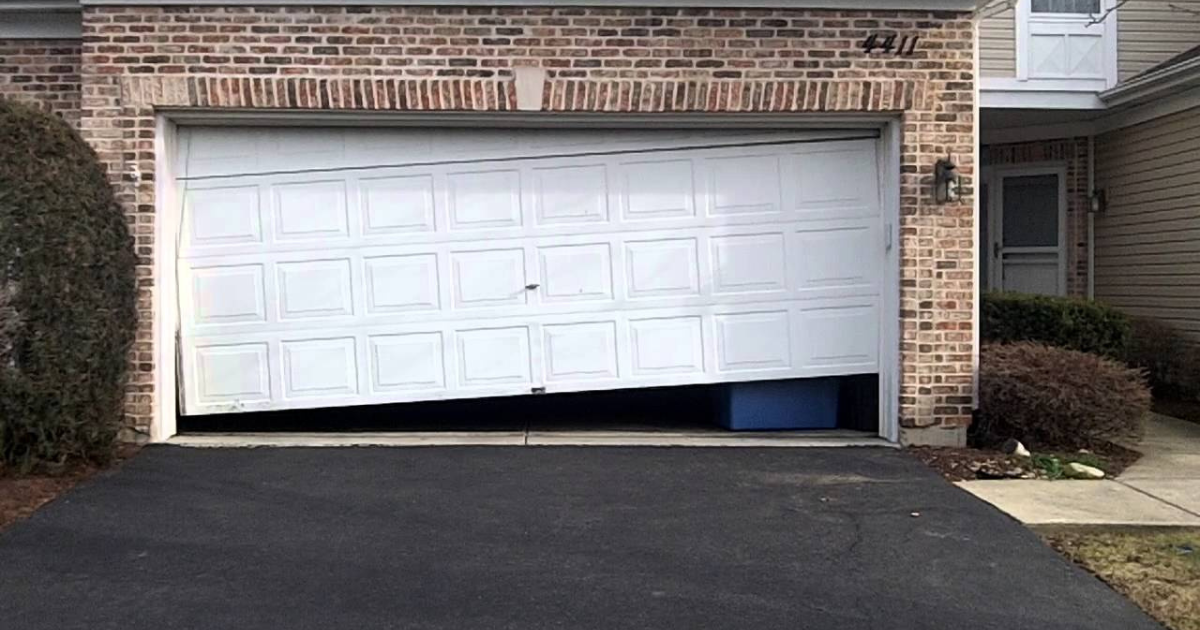
A garage door that is off track can feel scary because it often looks crooked, stuck, or ready to fall. In many cases, the door may be partly hanging, rubbing the frame, or making loud grinding sounds. This is not just an inconvenience. It is a safety issue and a security issue, because a door that is not moving correctly can drop suddenly or leave your garage partly open.
When you need garage door off-track repair, the best move is to slow down and treat it like a “stop and secure” situation. You do not need special tools to take the first smart steps. You just need to know what to do, what to avoid, and how to explain the issue clearly when you call for help.
Step-By-Step Actions To Take Right Away
When a garage door jumps the track, your first goal is safety. Your second goal is to keep the opening secure. Here is what to do in order.
Stop using the opener immediately.
If the door is crooked or stuck, pushing the remote again can make things worse. The opener is designed to move a balanced door that rolls smoothly. If one side is off track, the opener may pull harder on one side and twist the door. That can bend sections, damage rollers, or strain cables.
Keep everyone back.
Move kids, pets, and anyone standing nearby away from the door area. A door that is off track can shift suddenly. If a cable is loose or a roller is hanging, the door can drop or swing.
Leave the door where it is.
If the door is partway open, it is tempting to force it down. If it is partway closed, it is tempting to force it up. Both can be risky. The safest choice is to pause and assess before doing anything else.
Do a quick visual check from a safe spot.
Stand inside the garage, off to the side, and look for obvious signs:
- One side of the door sits lower than the other
- A roller sitting outside the track
- Track that is bent, pulled away from the wall, or loose at the brackets
- Cables that look slack, frayed, or uneven side to side
- Gaps between door sections that were not there before
Listen to what happened right before the problem.
Small details help a technician diagnose faster. For example:
- Did you hear a bang?
- Did it start after you backed out quickly?
- Did it bind halfway and then jerk?
- Was there wind, impact, or vibration?
If the door is stuck open, secure the area.
Do not stand under the door or try to “hold it” while someone else works. Instead, keep the opener off, keep the space clear, and move vehicles out only if you can do so safely.
If you want the deeper “why,” read this next.
Many off-track issues start with worn rollers, loose track brackets, or impact to the track.
Quick rule to remember: If the door looks uneven, do not keep testing it. The more it moves while off track, the higher the chance of damage.
To understand the root cause behind an off-track door, read What Causes A Garage Door To Go Off Track.
What Not To Do And Why It Matters
When something goes wrong, most homeowners try to “help” the door finish closing. That is understandable, but it can turn a small issue into a bigger repair.
Do not keep pressing the wall button or remote.
Repeated opener attempts can:
- Pull the door sideways and bend the track
- Crack hinges or damage door sections
- Strip gears inside the opener
- Snap rollers or loosen brackets
Do not yank the emergency release and try to lift the door fast.
The emergency release disconnects the opener, but it does not solve the off-track problem. If the door is unbalanced, lifting can feel heavy and unpredictable. If a cable is loose on one side, the door can twist.
Do not try to “kick” the roller back into the track.
It might look like the roller just needs to pop back in, but the real issue is usually track alignment, worn rollers, loose brackets, or a door that is twisting. Forcing it can damage the roller stem or bend the track lip.
Do not loosen bolts unless you truly know what you are doing.
Tracks and brackets hold the system in alignment. If you loosen hardware without supporting the door correctly, you can cause sudden movement.
Do not ignore cable problems.
Cables are a major safety part. If one cable is slack or frayed, the door can lift unevenly or drop on one side. That is one of the most common reasons a door ends up off track again after someone tries a quick DIY move.
Do not assume the opener is the problem.
Many off-track situations are mechanical issues: rollers, track, hinges, or a door that is no longer balanced. The opener is often just the “messenger” that shows you the problem because it can’t move the door normally anymore.
If you remember only one thing from this section, make it this: Do not force movement. Off-track doors need controlled correction, not extra cycles.
Can You Close The Door If It’s Off Track
This is one of the most common questions, especially when you need to leave the house or protect what is inside the garage. The honest answer is: sometimes, but only when the situation is mild and stable.
When closing is not safe
Do not try to close the door if you notice any of these:
- The door is hanging at an angle
- A roller is fully out of the track
- The track is bent or pulled away from the wall
- One cable looks slack, loose, or frayed
- The door is jerking, binding, or rubbing hard on one side
- You hear metal scraping or loud popping
- The bottom section is twisted, or the door looks “folded.”
In these cases, trying to close the door can cause the door to jam, damage panels, or drop.
When closing may be possible
If the door is only slightly misaligned, the track looks solid, and the door is not twisting, it may be possible to lower it slowly by hand. Even then, the goal is not to “muscle it.” The goal is controlled movement.
Safer alternatives if you need security right now
- If the door is open and you cannot safely close it, secure the inside door from the garage to the home (if you have one).
- Move valuables away from the opening.
- If possible, have a trusted neighbor keep an eye on the home until service arrives.
- Consider parking a vehicle to block access if that can be done safely.
A simple safety line
If you do not feel safe standing next to the door while it moves, it is not safe to close it.
If you want a clear yes-or-no guide with safety rules and what we recommend in each scenario, read Can You Close A Garage Door That Is Off Track Safely.
How To Secure Your Garage Until Help Arrives
Once you have stopped the door and made sure everyone is safe, focus on security and clear communication.
Secure what you can inside.
- Keep the garage door remote out of reach, so no one accidentally activates the opener.
- Lock the door that connects the garage to the house.
- Move expensive items away from the opening if the garage is exposed.
Improve visibility.
- Turn on the garage lights at night.
- If you have exterior lighting, turn it on as well.
Avoid temporary “rigging.”
It can be tempting to tie a rope, wedge a block, or clamp something in place. Those moves can fail unexpectedly. Unless you have professional training and proper support, keep it simple: stop the door and wait.
Get the key details ready for the call.
When you contact a technician, these details help:
- Is the door stuck open, closed, or halfway?
- Is one side lower than the other?
- Did you see a roller out of the track?
- Did you notice a loose cable or a bent track?
- Did anything hit the track (car bumper, bike, trash can)?
Clear details help speed up diagnosis and reduce trial-and-error when the technician arrives.
What A Garage Door Off-Track Repair Visit Usually Includes
A proper garage door off-track repair is not only putting a roller back into a track. The real job is finding what caused the derailment and correcting it so it stays aligned.
Here is what a thorough visit often includes.
Full system inspection
- Track alignment and spacing checks
- Roller condition checks (worn wheels, cracked wheels, bent stems)
- Hinges and brackets checks (loose screws, cracked hinge plates)
- Cable and drum inspection (fraying, slack, uneven wrap)
- Bottom bracket area inspection (high-stress area)
- Door section condition (bends, cracks, shifted panels)
Track correction and stabilization
- Tightening loose track brackets
- Realigning the track so the rollers move smoothly
- Checking for track bends and correcting or replacing damaged track sections
- Confirming the track is securely mounted and evenly spaced
Roller and hardware corrections
- Replacing worn rollers that wobble or bind
- Adjusting hinge alignment if the door is tracking poorly
- Confirming the roller path is consistent from top to bottom
Balance and movement testing
A door that is poorly balanced can pull itself off track over time. A technician often checks:
- The door balance when disconnected from the opener
- Smooth travel by hand
- Whether the door “floats” near mid-height instead of dropping fast
Opener checks
Even when the opener is not the root cause, settings matter:
- Force settings and travel limits
- Safety sensors and reverse test
- Signs the opener strained during the off-track event
If you want context on why photo-eyes and reversal features matter, ULSE explains UL 325 entrapment protection requirements.
If you want help deciding when the issue is urgent and when you should call right away, read When To Call For Garage Door Off-Track Repair.
Why Garage Doors Go Off Track And How To Lower The Chances
A garage door goes off track when the rollers stop traveling in the intended path. That usually happens for a few repeat reasons.
Common reasons a garage door derails
- Impact on the track: A small bump from a car, trash bin, ladder, or stored items can shift the track enough to cause derailment.
- Worn rollers: Rollers wear down over time. Worn wheels can wobble, bind, or climb the track edge.
- Loose track hardware: Vibrations and normal use can loosen bolts. If the track shifts even slightly, rollers can slip out.
- Track misalignment: Tracks must be aligned and spaced correctly. If alignment drifts, the door can rub and jump.
- Cable issues: If one cable slips, loosens, or frays, one side can lift unevenly, twisting the door.
- Door section damage: A bent section can change how the door moves through the track.
Simple habits that help
- Listen for new scraping, popping, or squealing sounds.
- Watch the door as it moves. If it wobbles or shakes, that is a warning sign.
- Keep the track area clear. Do not store items near the vertical tracks.
- Schedule service if the door starts rubbing or looks slightly uneven.
Early warning signs
- The door feels heavier than usual
- One side moves more slowly than the other
- Rollers look tilted in the track
- Track bolts look loose, or brackets look shifted
- The door “sticks” at the same spot each time
Catching small alignment issues early is often the difference between a quick correction and a bigger repair.
To build a simple home upkeep schedule that helps catch small issues early, use this routine home maintenance checklist.
Restore Safe Operation And Protect Your Home
If your garage door is off track, the safest plan is to stop movement, keep the area clear, and focus on protecting your home until the system is corrected. A door that is crooked or binding is usually giving you an early warning that rollers, tracks, cables, or hardware need attention before more damage happens.
Premium Garage Door Repair helps Houston, TX homeowners get the door back on track safely, confirm the root cause, and restore smooth operation so the issue does not keep coming back. Contact us or give us a call.
Frequently Asked Questions
What does “garage door off track” mean?
It means one or more rollers are no longer rolling inside the track correctly, or the track alignment has shifted so the rollers cannot travel smoothly.
Is it dangerous to keep using the opener if the door is off track?
Yes. Continuing to run the opener can twist the door, strain cables, bend tracks, and increase the risk of the door dropping or jamming.
Can we push the roller back into the track ourselves?
In many cases, we do not recommend it. If the cause is loose track hardware, worn rollers, or cable issues, forcing the roller back can lead to repeat derailment or added damage.
What usually causes a garage door to jump the track?
The most common causes are track impact, loose brackets, worn rollers, and uneven lifting from cable or hardware issues.
If the door is stuck open, what should we do first?
Stop using the opener, keep everyone away from the door, secure the door into the house, and protect valuables until service arrives.
Will an off-track door damage the opener?
It can. If the opener keeps trying to pull a crooked or jammed door, it may strain internal gears or the rail system.
How fast can the problem get worse?
Sometimes in one opener cycle. If the door twists or binds, damage can happen quickly, especially to tracks, rollers, and door sections.
What information helps us diagnose the issue faster?
Tell us whether the door is stuck open or closed, whether it is crooked, if you saw a roller out of track, and if anything hit the track recently.
Can the weather cause a garage door to go off track?
Weather does not usually derail a door by itself, but it can speed up wear, shift hardware over time, or expose existing alignment issues.
How do we lower the chance of it happening again?
Routine inspection and tune-ups help. Keeping hardware tight, replacing worn rollers, maintaining alignment, and addressing odd sounds early can prevent repeat off-track issues.